
Burdock Monograph
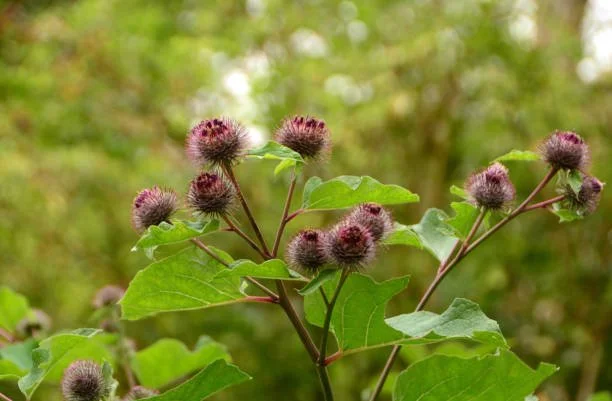
Botanical Name: Arctium lappa
Common Name: Burdock, gobo, beggar’s button, thorny burr
Family: Asteraceae
Traditional Chinese Medicine Name: Niu bang zi (fruit/seeds), niu bang gen (root)
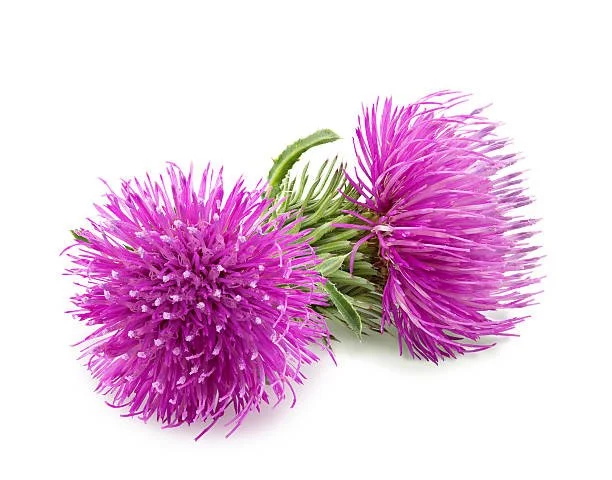
Parts Used: root, leaf, fruit, seed
Native Region: Temperate regions of Europe and Asia
Geographic Distribution: Can be grown in temperate regions worldwide
Botanical Description: A biennial plant. It forms a basal rosette in the first year and stays relatively close to the ground. Leaves are up to 2ft long and 1ft wide. They are wedge-shaped with wavy edges, and the underside has a dense, woolly texture. In the second year it sends up a flower stalk 2-9ft tall. Leaves are progressively smaller and less wavy near the top of the stalk. It develops pink or purple florets that form a composite flower head that is 1-1.5in in diameter with a prickly, globular green base. A large taproot can grow up to 4ft long and 3in wide. (1)
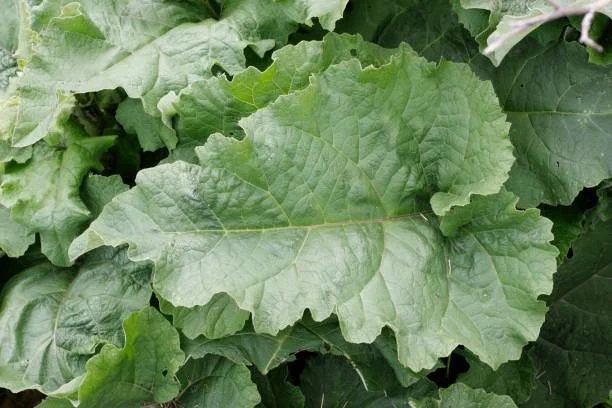
Harvesting Guidelines: Harvest roots in fall of the first year or spring of the second year before the stalk immerges. Harvest the seed in the fall of the second year. Use thick gloves and shares to avoid the burrs.
Constituents:
Root: Polysaccharides, lignans, terpenes, flavonoids, sterols, fatty acids, acetylenic compounds, phenolic compounds, thiophenes, amino acids, vitamins, and minerals
Seed: Lignans, sterols, fatty acids, phenolic compounds
Leaf: Lignans, terpenes, phenolic compounds
Uses:
The foremost detoxifying herb in both Western and Chinese herbal medicine (2)
Treats conditions caused by toxin “overload” (2)
Fruit and seed help cleanse the body of waste products (2)
Root may help eliminate heavy metals (2)
Can be used to help skin conditions that result in dry and scaly patches (3)
Stimulates digestive juices to help with digestion and appetite (3)
Supports kidney function and helps treat cystitis (3)
Works through the liver and kidneys as a diuretic and alterative to protect against the build-up of waste products (4)
Considered to be one of the best tonics for skin disorders (4)
Actions: alterative, diuretic, cholagogue, bitter, analgesic, anti-inflammatory, antioxidant
Preparations and Dosage:
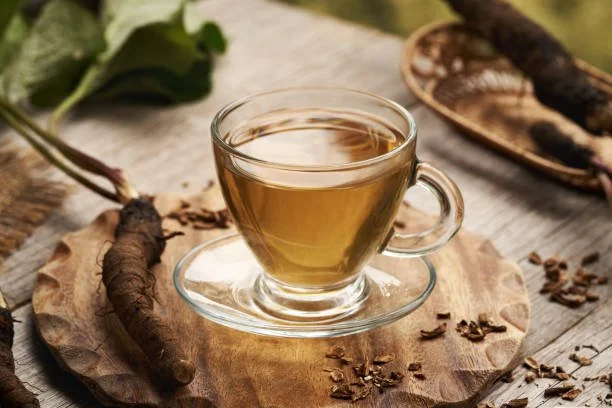
Decoction: 1tsp dried root in 8oz water 3x/day
Tincture: 2-4mL (1:5,40%) 3x/day
30-90 drops fresh root (1:2,60%) or dried root (1:5,60%) 3x/day
10-20 drops seed (1:5,60%) 3x/day (1)
Taste: bitter, sweet, slightly pungent
Energy: cooling and moistening
Contraindications: May trigger allergies in people sensitive to plants and the Asteraceae family. Do not take with prescription diuretics or during pregnancy and lactation. (1)
While burdock’s medicinal properties support the body’s natural cleansing processes, her role extends beyond the physical. This resilient plant has long been associated with release, persistence, and the gradual clearing of what no longer serves. Exploring her symbolism offers a deeper understanding of how her medicine works on multiple levels.
To explore burdock’s role in cleansing, release, and renewal, visit the companion blog post, “Burdock — The Deep Cleanser.”
References:
Chevallier, A (2000) Encyclopedia of Herbal Medicine (2nd edition)
Hoffman, D (2003) Medical Herbalism
Green, J (2002) The Herbal Medicine-Maker's Handbook
🌿 Disclaimer
Cronefire Creations™ shares herbal information for educational and inspirational purposes only. It is not intended as medical advice. Please consult a qualified healthcare professional before using herbs, especially if pregnant, nursing, or taking medication.
Offer whatever name you wish to be known by at the hearth today — real or imagined — we look forward to welcoming your words into the circle.