
Calendula Monograph
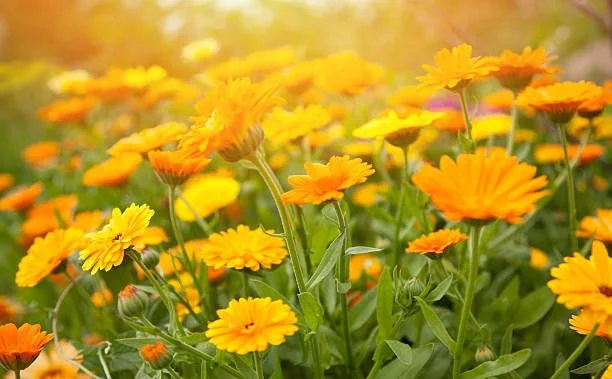
Botanical Name: Calendula officinalis
Common Name: marigold, pot marigold, garden marigold
Family: Asteraceae
Traditional Chinese Medicine Name: Jin zhan ju
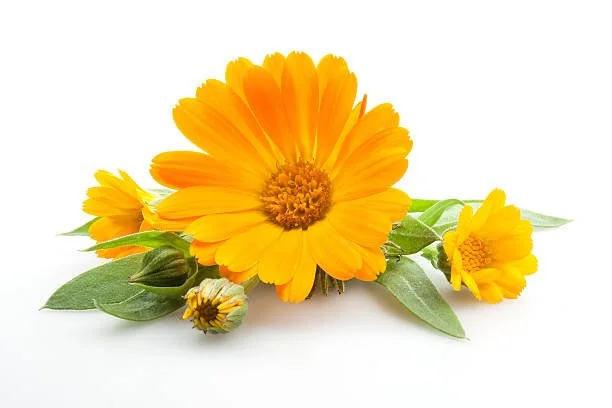
Parts Used: Petals, flowers
Native Region: Southern Europe
Geographic Distribution: Worldwide in temperate regions
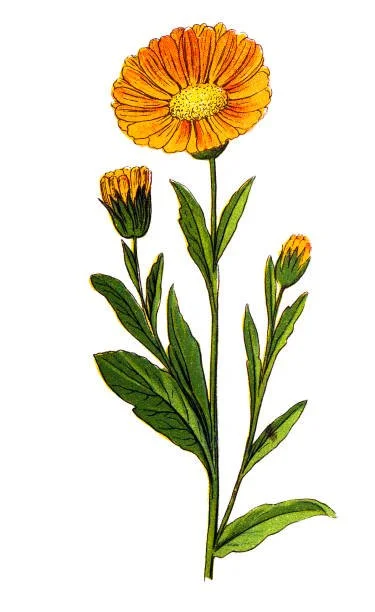
Botanical Description: Typically, a perennial that can grow up to 24 inches tall. The resin content causes a sticky texture. The stalk supports many branching stems. Leaves are 3-6 inches long and oblong shaped. Flower heads can be 1-3 inches across and are orange or yellow. There is a central cluster of tubular flowers surrounded by several rows of ray florets.
Harvesting Guidelines: Harvest flowers after dew has evaporated. Flowers can be harvested from spring through fall and can be picked every 2-3 days to encourage additional blooming. (1)
Constituents: triterpenes, resins, bitter glycosides, volatile oils, phytoestrols, flavonoids, mucilage, carotenes, phenolic acids, polysaccharides
Uses:
Infusions and tinctures can be used to treat chronic infections (2)
Internally can help inflammatory problems of the digestive system such as gastritis, peptic ulcers, regional ileitis and colitis (2)
May help treat toxicity that underlies many fevers and infections and systemic skin disorders (2)
It is cleansing for the liver and gallbladder (2)
Has an antimicrobial affinity for the digestive system (3)
Supports the movement of lymph for better detoxification (4)
As a bitter, it can directly stimulate liver function, detoxification, and metabolism (4)
Its astringent effect on capillaries makes it helpful for cuts, wounds, varicose veins, and various inflammatory conditions (2)
May speed up healing of wounds and skin ulcers (3)
Be sure to fully clean wounds before using calendula topically due to the rapid repair of tissues (1)
Sooths minor burns (3)
Actions: anti-inflammatory, relieves muscle spasm, astringent, heals wounds, antiseptic, detoxifying, antimicrobial, hepatic, lymphatic, vulnerary, antifungal
Preparations and Dosage:
Tincture 1-4mL (1:5,60%) 3x/day
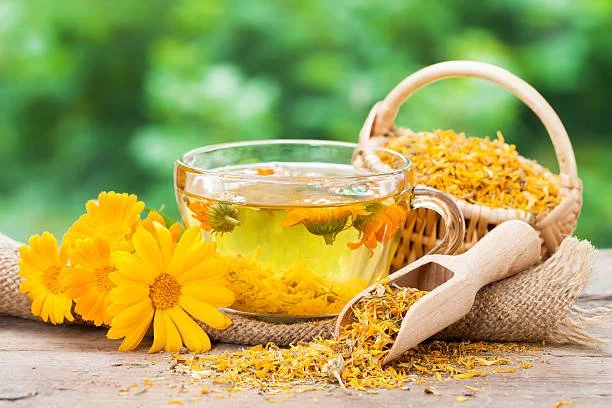
Infusion1-2tsp dried flower in one cup boiling water 3x/day
Topically: lotion, salve or wash as needed
Taste: bitter, pungent, salty, sweet
Energy: drying, warming
Contraindications: Do not use during pregnancy. May cause an allergic reaction to those sensitive to the Asteraceae family. Use caution when taking hypnotic and anxiolytic drugs.
Every plant teaches on more than one level. To explore calendula’s message of gentle healing, restored flow, and renewal, continue to the companion blog post.
References:
Chevallier, A (2000) Encyclopedia of Herbal Medicine (2nd edition)
Hoffman, D (2003) Medical Herbalism
https://www.herbalreality.com/herb/calendula/
🌿 Disclaimer
Cronefire Creations™ shares herbal information for educational and inspirational purposes only. It is not intended as medical advice. Please consult a qualified healthcare professional before using herbs, especially if pregnant, nursing, or taking medication.
Offer whatever name you wish to be known by at the hearth today — real or imagined — we look forward to welcoming your words into the circle.