
Cleavers Monograph
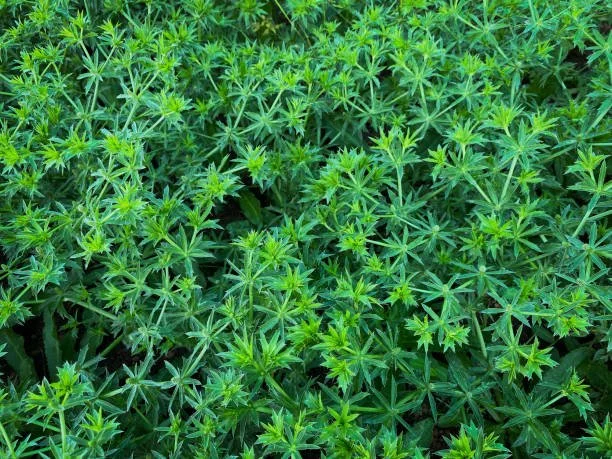
Botanical Name: Galium aparine
Common Name: cleavers, catchweed, barweed, cleverwort, bedstraw, devil’s garters, goose grass, scratchweed, stickyweed
Family: Rubiaceae
Traditional Chinese Medicine Name: Chu-yang-yang (1)
Parts Used: Aerial parts
Native Region: Europe and Asia
Geographic Distribution: Found in many temperate regions including Australia (2)
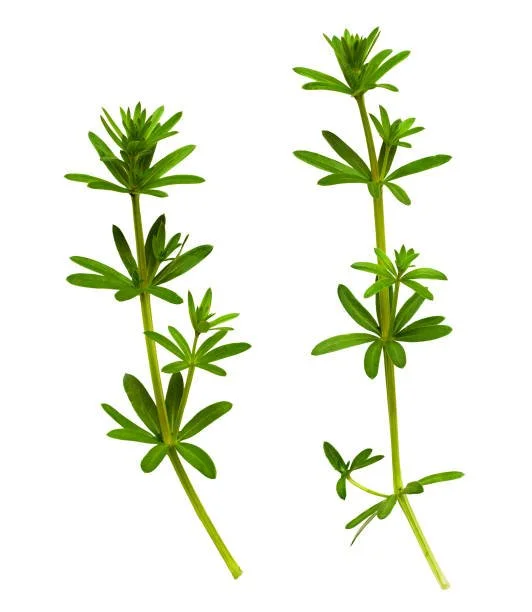
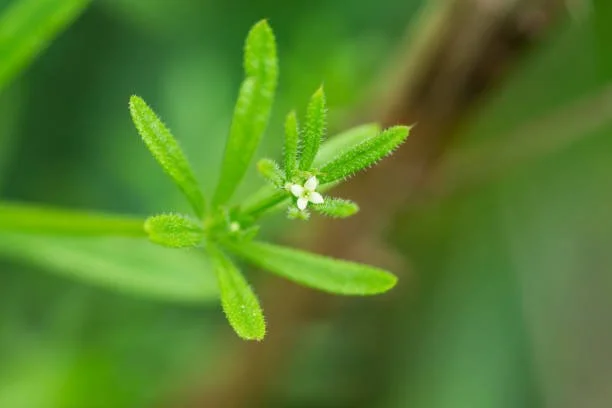
Botanical Description: An annual with tiny, hooked hairs that point down and stick to surfaces. The stems are square and fragile. It has small, stalked flowers which are star-like with four white petals. The fruit is green or purple-black with hooked hairs that latch onto passing animals to ensure dispersal. Usually grows 2 – 3 ft tall with narrow, lance-shaped, prickly leaves organized in whorls of 6 – 8. (1)
Harvesting Guidelines: Can be harvested when herb is flowering either before or after seed formation. Dry immediately.
Constituents: iridoids, polyphenolic acids, alkanes, flavonoids, tannins, anthraquinones, plant acids (caffeine, salicylic, citric), coumarins found in the root (2)
Uses:
Can help skin diseases such as seborrhea, eczema and psoriasis (2)
May help ease swollen lymph glands (2)
Useful as a general detoxifying agent in serious illnesses such as cancer (2)
The juice and the infusion can be helpful for kidney stones and other urinary problems (2)
May help relieve dermatitis (3)
As an alterative, it can ease chronic inflammatory and degenerative diseases (3)
Great tonic for the lymphatic system (3)
Can be useful in the treatment of ulcers and tumors (3)
Can relieve lymphatic swelling where there is an acute “hot” inflammation (4)
As a cooling diuretic it can soothe an irritable urinary tract (4)
Actions: diuretic, alterative, anti-inflammatory, tonic, astringent, demulcent, detoxicant, lymphatic
Preparations and Dosage:
Infusion: 2 – 3tsp dried herb in 8oz boiling water 3x/day
Juice: ½ - 1tsp 4x/day
Tincture: 4 – 8mL (1:5,25%) 3x/day
Taste: bitter, salty, sweet
Energy: cooling, drying
Contraindications: due to its strong diuretic action and cooling nature, it is contraindicated in diabetics. Hooked hairs may cause dermatitis.
While cleavers’ medicinal properties support the body’s natural movement of fluids and waste, its deeper meaning unfolds through its symbolism of connection, release, and gentle flow. Exploring its role within the Herbs of Cleansing & Renewal series offers a broader understanding of how this plant supports both body and spirit.
→ To explore cleavers’ role in movement, release, and renewal, visit the companion blog post, “Cleavers — The Lymph Mover.”
References:
Chevallier, A (2000) Encyclopedia of Herbal Medicine (2nd edition)
Hoffman, D (2003) Medical Herbalism
Green, J (2002) The Herbal Medicine-Maker's Handbook
🌿 Disclaimer
Cronefire Creations™ shares herbal information for educational and inspirational purposes only. It is not intended as medical advice. Please consult a qualified healthcare professional before using herbs, especially if pregnant, nursing, or taking medication.
Offer whatever name you wish to be known by at the hearth today — real or imagined — we look forward to welcoming your words into the circle.