
Mugwort Monograph
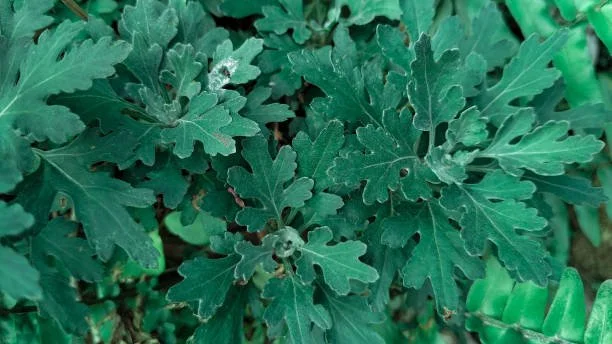
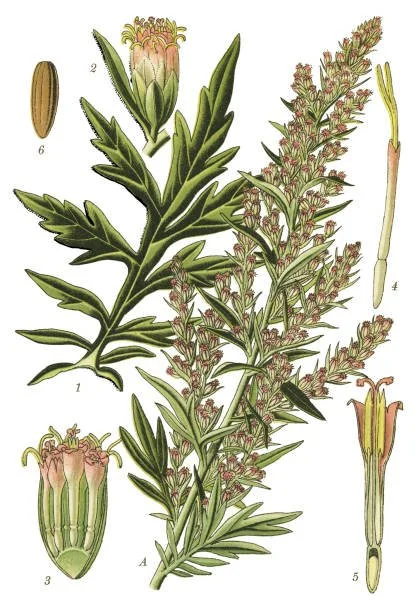
Botanical Name: Artemisia vulgaris L.
Common Names: Mugwort, felon herb, St. John’s plant, sailor’s tobacco, naughty man, chrysanthemum weed, wild wormwood, white sage (1)
Family: Asteraceae
Traditional Chinese Medicine Name: Ài (or àicǎo)
Ayurvedic Name: Nagadamani
Parts Used: Leaves, root (1)
Native Region: Temperate Eur-Asia to Indochina and northern Africa (1)
Geographic Distribution: Found in temperate regions of the northern hemisphere, it flourishes in open areas and along roads. (2)
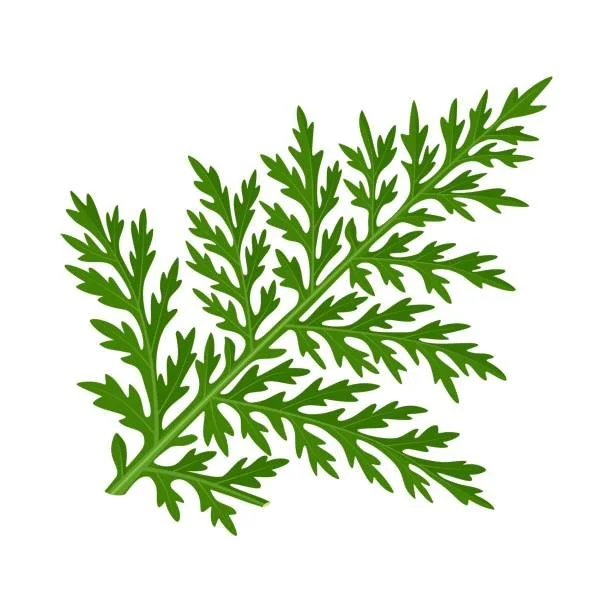
Botanical Description: A perennial that grows up to 3 feet tall. It has leaves that are divided into smaller leaflets arranged on either side of a central stalk. The leaves are downy and appear silver-gray underneath. The flowers are tiny and on clustered branches. They are yellow or reddish and bloom in late summer. The root is woody and grows to about 8 inches. (1)
Harvesting Guidelines: Gather leaves in late summer just before flowering. (2) Roots may be harvested in fall. For use as incense or in a dream pillow, harvest during flowering/seeding. (1)
Constituents: Flower: Volatile oils (i.e. cineole, camphor and thujone), beta-sitosterol, coumarins, and apha and beta carotene. Roots: tannins, inulin and resin. (5)
Uses:
• As a hypnotic, mugwort is a nervine that may help induce sleep (3)
• Can be taken long term in low dose to improve appetite, digestive function and absorption of nutrients (2)
• Has been used to ease malaria due to its antiseptic action (2)
• Its antioxidant action can help metabolize rancid fats and protects the liver from damage from free radicals (4)
• Stimulates bile flow helping to remove liver congestion (4)
• As a nervine tonic it may ease tension and aid in depression (4)
• Has an affinity for the female reproductive system and can balance and support menstruation by taking internally or applying topically to the lower abdomen (5)
• Topically can soothe poison oak rashes, abate wounds and ease swelling and inflammation (1)
Actions: Anti-inflammatory, bitter carminative expectorant (1) antispasmodic (3) cholagogue, antioxidant, liver tonic, nervine tonic (4) anthelmintic (expels internal parasites), diuretic, diaphoretic (5)
.
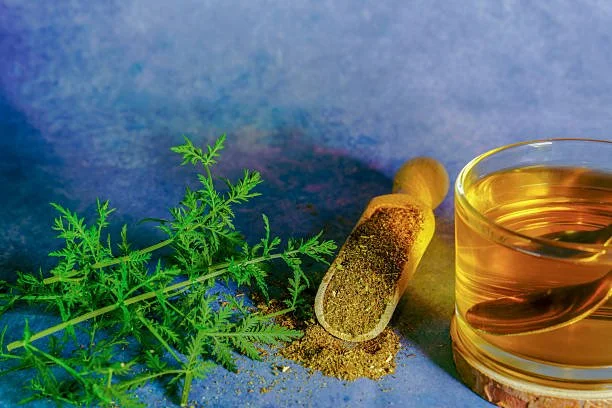
Preparations: Tincture, tea, strong tea topically
Taste: Bitter (mild), slightly sweet
Energy: Bitter, acrid, warm (5)
Dosage: Tea – 1-2 tsp steeped in hot water for 15 minutes
Tincture – 1-4 mL (1:5,25%) 3x/day
Contraindications: Do not take during pregnancy
Ready to wander deeper into the garden?
Visit the Heart & Spirit Series to meet the herbs of love, joy, dreams, and wisdom.
References:
(1) https://herbarium.theherbalacademy.com/monograph/mugwort/
(2) Chevallier, A (2000) Encyclopedia of Herbal Medicine (2nd edition)
(3) Hoffman, D (2003) Medical Herbalism
(4) Green, J (2000) The Herbal Medicine-Maker's Handbook
(5) https://www.herbrally.com/monographs/mugwort
🌿 Disclaimer
Cronefire Creations™ shares herbal information for educational and inspirational purposes only. It is not intended as medical advice. Please consult a qualified healthcare professional before using herbs, especially if pregnant, nursing, or taking medication.
Offer whatever name you wish to be known by at the hearth today — real or imagined — we look forward to welcoming your words into the circle.