
Nettle Monograph
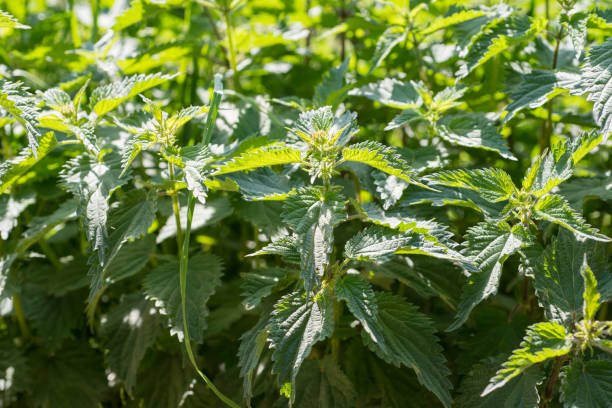
Botanical Name: Urtica dioica
Common Name: Nettle, Common nettle, Stinging nettle
Family: Urticaceae
Traditional Chinese Medicine Name: Hsieh-tzu-ts’ao (1)
Ayurvedic Name: Vrishchikali (1)
Parts Used: Leaves, stalks, rhizome, and seeds
Native Region: Europe and Asia
Geographic Distribution: Worldwide in temperate regions
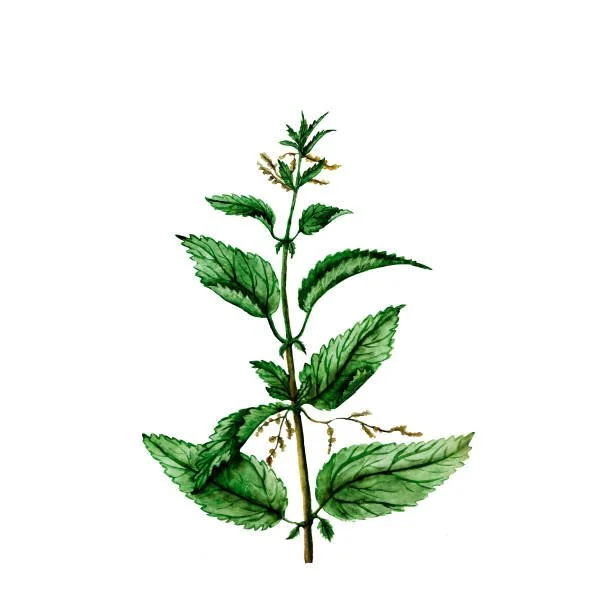
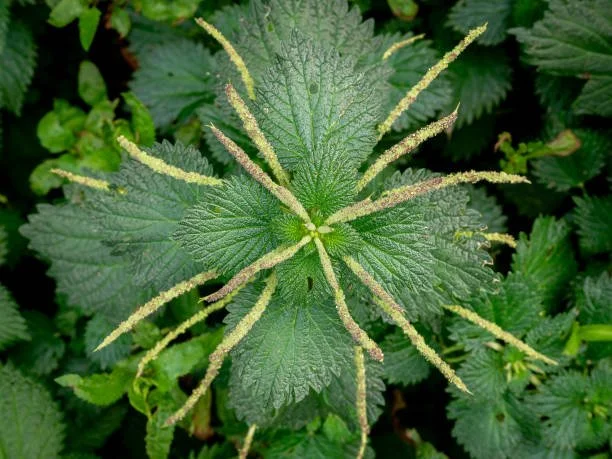
Botanical Description: Can grow 2-4 feet tall. Stem is square and fiberous with grooves along the length. Leaves are ovate and sharply toothed with pointy tips and heart shaped bases and are dark green. Leaves and stems are covered with tiny hollow hairs tipped with silica (the stinging part of stinging nettle). The plant typically grows in dense colonies on multiple stems via rhizomes. Tiny green flowers grow from leaf axils in drooped bunches. (1)
Harvesting Guidelines: Wear gloves and protective clothing due to stinging hairs. Harvest top 6 inches of plant in the spring and early summer before flowering. Harvest seeds while still green. Rhizome can be harvested after the first frost in autumn or in spring when the ground is diggable.
Constituents: Amines (histamine, choline, acetylcholine, serotonin). Glucoquinone. (2) Vitamins A, C, E, and K, riboflavin and thiamine, minerals (calcium, chromium, magnesium, manganese, phosphorus, potassium, silica, iron, and zinc), protein, formic acid, flavonol glycosides (quercetin, kaempferol, and isorhamnetin) and chlorophyll. (1)
Uses:
Can be cooked as a vegetable and tastes like spinach (2)
Cleansing/detoxifying due to the diuretic action, flavonoids and increased potassium content (2)
Astringent to slow down bleeding from wounds or nose (2)
May help with mild asthma/hay fever, itchy skin conditions and insect bites (2)
Sooths eczema – both by internal ingestion and topically (2)
Hypotensive to decrease elevated blood pressure (3)
Strengthens the mucosa of the urinary, digestive, and respiratory system (leaf) (4)
When taken fresh helps against allergic response (4)
Prevents urid acid build-up in joints which is helpful in cases of gout, rheumatism, and arthritis (4)
Actions: Diuretic, tonic, astringent, prevents hemorrhaging, antiallergenic, reduces prostate enlargement (root), anti-inflammatory (2) Hypotensive (3)
Preparations and Dosage:
Tincture: 2.5-5mL dried leaf (1:5, 40%) 3x/day or 1-3mL dried root (1:4, 50%) 3x/day
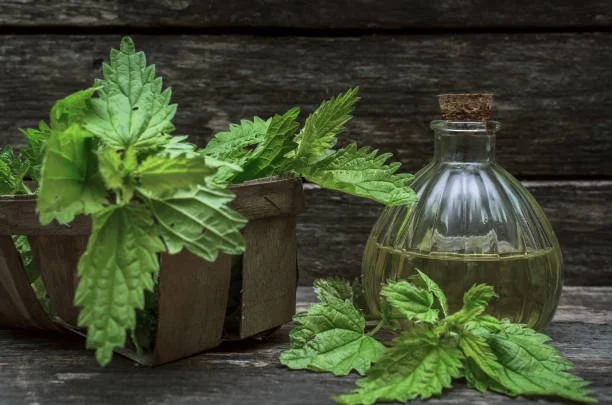
Infusion: 8fl oz (1oz dried leaf in 1qt water boiling water) 1-4x/day
Juice: 5-10mL fresh juice 3x/day
May also be eaten as a food and leaves can be freeze dried
Taste: Astringent, salty
Energy: Cooling, drying
Contraindications: Internal use may decrease the efficacy of anticoagulant drugs. (3) Should only be taken by diabetics under the guidance of a qualified healthcare professional. (1)
Caution: After making an infusion, strain through a cheese cloth and do not squeeze the cloth to prevent the stinging hairs from passing through.
To explore the deeper symbolism and transformational lessons of nettle, visit the companion blog post,
Nettle — The Strength Builder.
References:
Chevallier, A (2000) Encyclopedia of Herbal Medicine (2nd edition)
Hoffman, D (2003) Medical Herbalism
Green, J (2000) The Herbal Medicine-Maker's Handbook
🌿 Disclaimer
Cronefire Creations™ shares herbal information for educational and inspirational purposes only. It is not intended as medical advice. Please consult a qualified healthcare professional before using herbs, especially if pregnant, nursing, or taking medication.
Offer whatever name you wish to be known by at the hearth today — real or imagined — we look forward to welcoming your words into the circle.